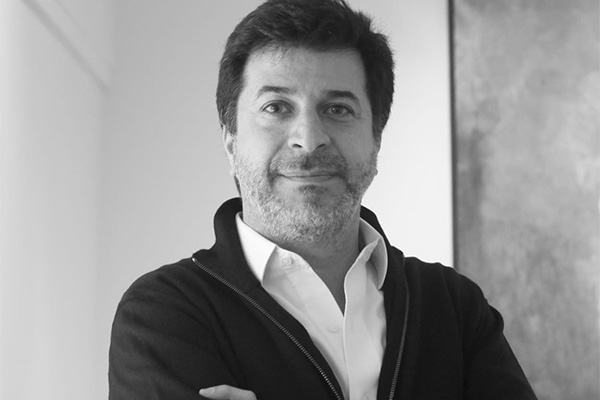
If the Beiteddine Art Festival’s return in 2025 is proof of anything, it is that Lebanon’s cultural resilience continues to beat the odds. The festival is a powerful declaration that beauty still belongs here, and that art always carries hope. And it is one that has both inspired and deeply resonated with Saleh Barakat, who returned for his second time at the festival with “Nothing but Flowers”, an exhibition that speaks less to theory and more to feeling.
A renowned gallerist, curator and art expert, Barakat has long championed both Modern Arab painters and emerging Lebanese artists. He has played a pivotal role in shaping regional collections and raising the global profile of local artists. Yet this exhibition is anything but exclusive. Quite the contrary, it’s a celebration of simplicity, accessibility, and shared optimism.
“Nothing but Flowers” is an invitation for all to reconnect with the most universal symbol of life and renewal. A reminder, as Barakat tells ult.society, that happiness can still bloom in difficult times.
The exhibition is on view at the Beiteddine Palace, part of the Beiteddine Art Festival until August 31, 2025.
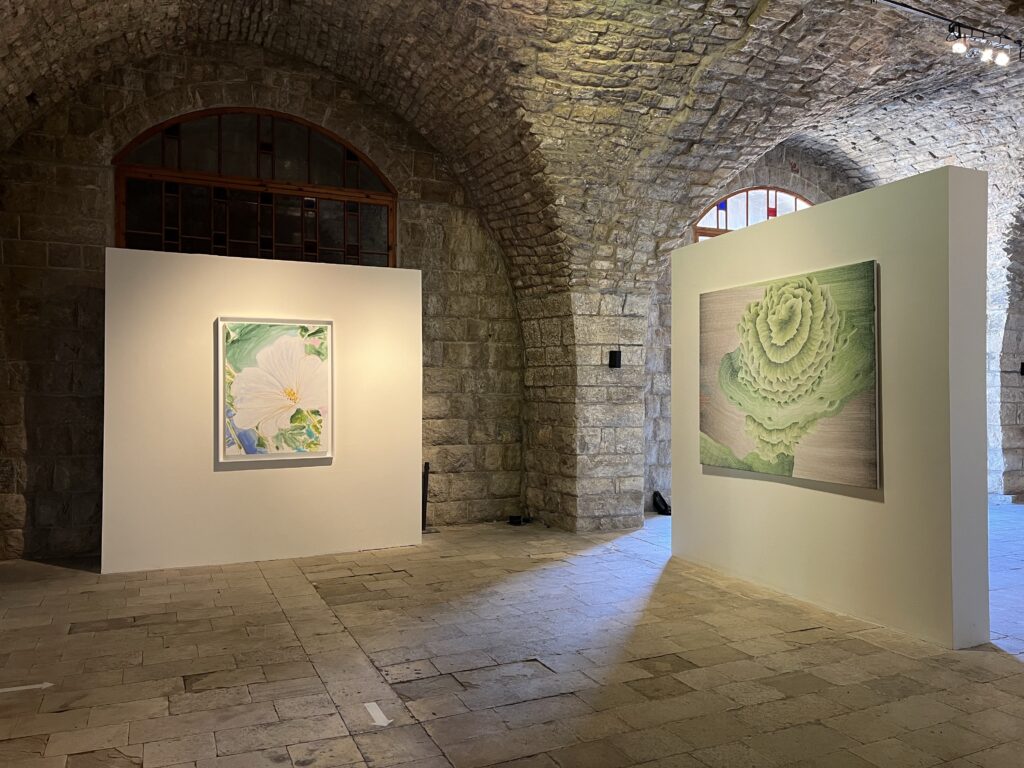

Nothing but Flowers, Exhibition View, Beiteddine Palace, 2025.
Images courtesy of Saleh Barakat Gallery.
“Nothing but Flowers” – is this exhibition a continuation or evolution of the one you held back in 2019 at your gallery? If so, what inspired you to revisit this theme after six years?
There were several factors at play in my decision to craft the exhibition around a flower theme. First, and importantly, Lebanon has just emerged from a war, and I felt it would be appropriate to choose a theme that would be a celebration of happiness in these difficult times. Particularly when it seems that there is much to despair of, I believe it is exactly the moment to turn the other way, to find moments of delight and fun, happiness and hope, and to share this possibility with others. Second, and in a moment of serendipity, BeMA [Beirut Museum of Art] made the decision to finish their part of the exhibition with a painting by Bibi Zogbe, also known as “Il Fondo Rosa” (“The One Fond of Flowers”). I took this end point as the beginning of my own part of the exhibition, seeing it as a call to show more of her works, and then again, to use this collection as a starting point from which to branch out to exhibit other pioneer artists who painted flowers as part of their practice.
Can you walk us through the concept of “Nothing but Flowers” and its underlying narrative? Were there specific inspirations or moments that shaped this iteration of the exhibition?
Beginning with Bibi Zogbe, the obvious choice was to showcase other masters like Onsi, Gemayel, and then to proceed with the next generation of masters. Of course, the availability of museum works and the capacity to borrow them for public exposure at the Beiteddine Palace during the festival, with all the underlying risks, necessarily influenced my choice of paintings and access to them. While I think I managed to gather a fairly representative number of artists, the selection is in no way comprehensive. Indeed, a comprehensive selection was never the objective. Rather, I wanted to create the conditions for a large audience to visit the Shouf area, and to be exposed to such masterpieces. Adding a selection of contemporary artists was an organic culmination of a project designed to show a panorama of flower paintings from Lebanon that covers almost a century.
Flowers have been an enduring motif in art history. What guided your selection of these particular works and artists?
As I mentioned above, I felt it was important to align my curation with BeMA’s, while at the same time shedding light on a topic that brings happiness, colors and positivity – attributes that I believe are particularly important during such tense times for the region. While flowers are, of course, an enduring motif in art history, I feel they can also be a little neglected, at times overshadowed by themes that can appear of more obvious weight and importance. For me, the flower is a wide and delightfully diverse subject, encompassing the domestic but also the wild, a way to express the myriad possibilities of life in its simplest, and yet most complex forms. As well as this, the choice of artists was influenced by accessibility, historical importance and the artists’ infatuation with flowers as part of their practice.
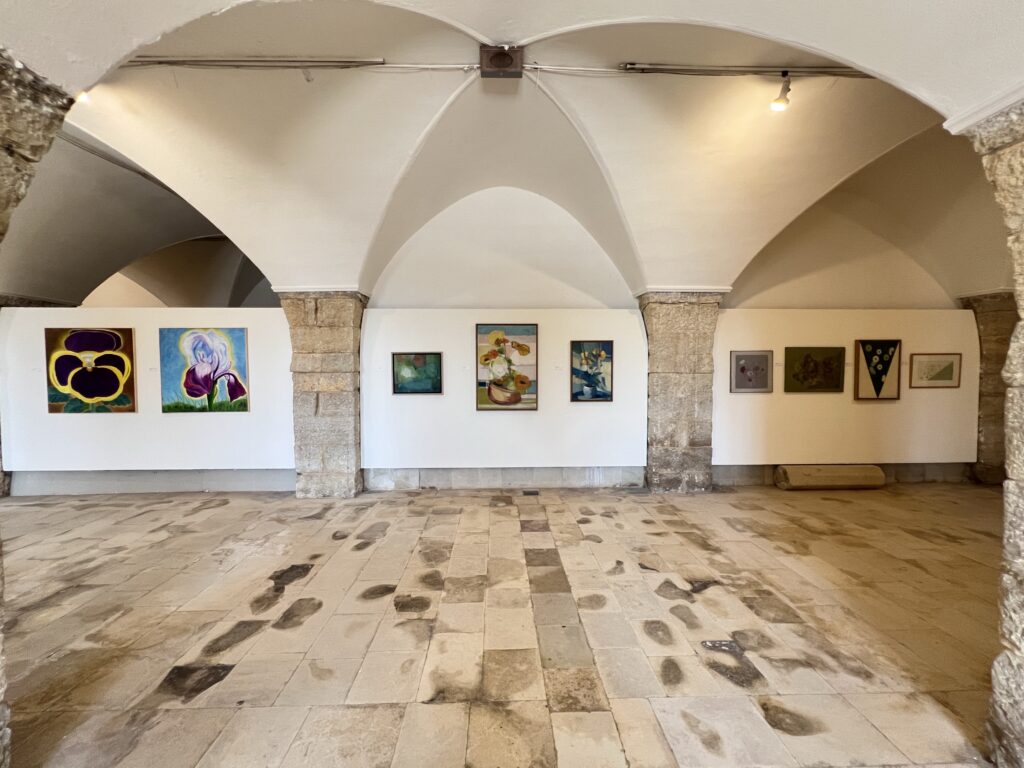
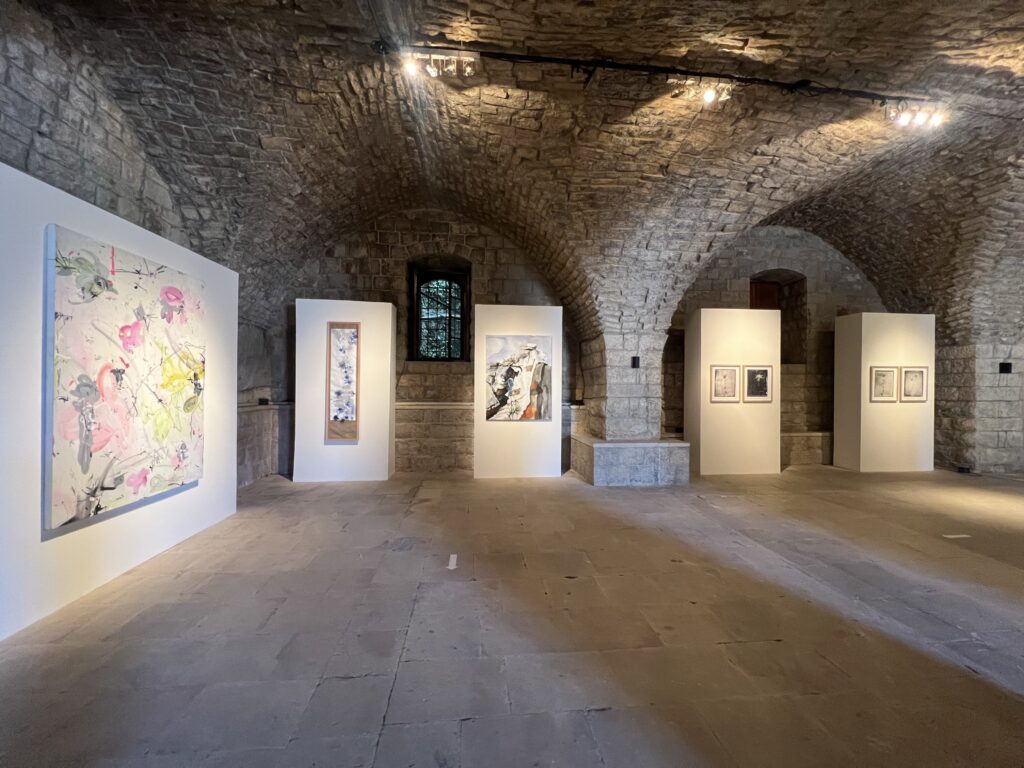
Nothing but Flowers, Exhibition View, Beiteddine Palace, 2025.
Images courtesy of Saleh Barakat Gallery.
The exhibition gathers works by artists from different generations and movements/styles. How did you ensure coherence across such a diverse spectrum? Was there a specific narrative or emotional thread that allowed the works to ‘talk to’ each other? Have any unexpected dialogues emerged between pieces once they were placed side by side?
I cannot pretend to have had such aspirations with the selection of works. The exhibition space was formerly the stables of the historical Beiteddine Palace. And of course, the format of any exhibition has to be adapted to this particular architecture with its codified restrictions. As such, around 50 independent panels were provided, and I decided to dedicate one to each artist. I tried to create dialogues between the different panels, each one with its own niche within a stone arch, through chronology, diversity of media, and color palettes. Creating an exhibition is always a unique experience – bringing together artworks, space, emotions and ideas. And this was no different. I strongly feel that the exhibition provides a welcome space for joy and reflection created through the process of arranging these particular paintings together in a specific way, in this unique space, at this moment.
What do you hope visitors will take away from this exhibition, whether emotionally, intellectually, or culturally?
I hope that visitors will leave in a good mood, the exhibition allowing for a short escape from the evident tensions outside. There is also a didactic dimension to the show, allowing around 50,000 visitors from different walks of life and different socio-economic backgrounds, to have access to highly qualitative paintings, otherwise reserved only to collectors and the art-savvy elite. This decentralization of art and culture is part of my broader aspirations to bridge the enormous gap between Beirut as a center for all major activities, and the wider periphery. It’s always hard to say how an exhibition will affect any one viewer on a personal level, but I hope that each person will feel that there is something for them in this wide and diverse collection, and that the exhibition touches on both the particularity of Lebanon and the connectedness of all places and peoples.
Curating an exhibition often comes with personal highlights. Do you have a piece that resonates with you on a deeper level?
Honestly, it’s very hard to answer such a question. Each artwork has its own beauty, so it’s almost impossible to compare. Sometimes the heart beats for the more classical works, and at others it leans towards more avant-garde experiences. Each work in the exhibition was chosen for its singularity, and highlights the infinity of solutions that art can allow. Art is quintessential because it promotes pluralism and diversity; it opens people’s eyes to appreciate “difference” as enrichment and wealth, rather than a stagnation in uniformity and mediocrity. Each flower has its own charm, its own scent, and its own fragility. I am unable to choose one, and frankly I don’t see why I need to choose if I can enjoy them all! The world is so abundant. We only need to open our eyes and souls!